
Top Health Innovations Transforming Medicine
Medicine has entered an age of extraordinary progress. Technology and science now merge to create treatments that once seemed impossible. From artificial intelligence to regenerative therapy, these innovations redefine how doctors diagnose, treat, and prevent diseases.
Healthcare today no longer focuses only on curing illness. It aims to predict, prevent, and personalize care for every individual. The combination of digital tools, advanced research, and human creativity is transforming how the world views medicine.
Below are the top health innovations shaping modern medicine and building a healthier, smarter future for everyone.
Artificial Intelligence Changing Healthcare
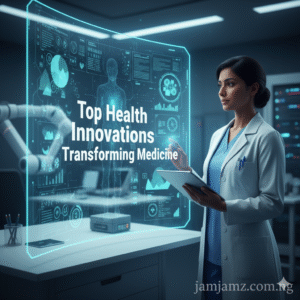
Artificial intelligence, or AI, has become a major force in modern medicine. It analyzes medical data faster than humans and detects diseases at their earliest stages. AI helps doctors read X-rays, CT scans, and lab results with remarkable precision.
By studying thousands of cases, AI systems can identify subtle patterns that might escape the human eye. These tools support doctors in diagnosing cancer, heart conditions, and other complex diseases with incredible accuracy.
AI also assists in creating personalized treatment plans. It predicts how each person will respond to specific medications, helping physicians choose the right option the first time. This reduces trial and error, speeds recovery, and saves lives.
The result is faster diagnosis, fewer mistakes, and smarter medicine that benefits both patients and practitioners.
ALSO READ: IT Jobs Abroad with Visa Sponsorship
ALSO READ: Tips for a Successful Study Abroad Checklist: Everything You Need Before Moving Abroad
Telemedicine: Healthcare Without Boundaries
Telemedicine has transformed how patients receive care. It allows people to connect with doctors through video calls, chats, or phone consultations without visiting a clinic.
This approach saves time and makes healthcare accessible to people who live far from hospitals or have limited mobility. Patients can share test results, discuss symptoms, and receive prescriptions from the comfort of their homes.
Telehealth technology also supports follow-up care. Doctors can track patients’ progress and adjust treatment plans remotely. This continuous connection builds stronger patient-doctor relationships and ensures better outcomes.
Telemedicine removes barriers, delivering quality healthcare anytime and anywhere.
Wearable Technology and Smart Health Monitoring
Wearable devices have changed how people take charge of their health. Smartwatches, fitness trackers, and biosensors record heart rate, sleep, movement, and even stress levels throughout the day.
These devices do more than display data. They send alerts about abnormal patterns, such as irregular heartbeats or sudden drops in oxygen levels. Early warnings encourage users to take action before serious problems occur.
Continuous monitoring empowers people to make better lifestyle decisions. It also provides doctors with valuable data for diagnosing and managing chronic conditions.
Wearable technology turns daily life into a constant health check, promoting awareness and prevention.
Personalized and Genetic Medicine
Every person’s body responds differently to medication and treatment. Personalized medicine acknowledges that difference by using genetic information to design specific care plans.
Doctors can now identify the exact genetic cause of many illnesses. By understanding an individual’s DNA, they can predict disease risks and choose therapies that target the root cause rather than the symptoms.
Genetic mapping enables early detection and precision treatment for conditions such as cancer and diabetes. This approach increases success rates, reduces side effects, and shortens recovery time.
Personalized medicine moves healthcare away from the “one-size-fits-all” model toward an era where treatment fits the individual, not just the disease.
3D Printing Revolution in Medicine
Three-dimensional printing has introduced a new level of precision to healthcare. Medical teams now use it to create custom prosthetics, implants, and even detailed organ models for surgery preparation.
By printing materials that match a patient’s anatomy, doctors can improve comfort and functionality. This customization leads to quicker healing and more natural results.
3D printing also allows surgeons to practice complex operations on accurate models before performing them on patients, increasing safety and confidence.
This innovation gives doctors creative control and gives patients hope through tailored medical solutions.
Robotic Surgery and Automated Healthcare
Robotic technology has redefined surgical precision. Robotic-assisted systems allow surgeons to perform intricate procedures through tiny incisions, improving accuracy and reducing recovery time.
These machines follow the surgeon’s movements with incredible steadiness and detail. They minimize pain, blood loss, and hospital stays for patients.
Automation also improves hospital efficiency. Robots deliver medications, clean environments, and support nursing staff, freeing up time for more critical patient care.
The partnership between humans and robots represents a new chapter in medicine—one where precision, safety, and speed meet.
Regenerative Medicine and Stem Cell Advancements
Regenerative medicine focuses on repairing or replacing damaged tissues and organs instead of just treating symptoms. Stem cells are at the heart of this field. They can transform into various cell types to restore lost or injured functions.
Doctors have used stem cell therapy to rebuild heart tissue, restore vision, and repair spinal injuries. These methods offer real hope for conditions once believed untreatable.
Regenerative medicine aims to renew the human body from within, turning recovery into restoration and giving patients a chance to heal completely.
Nanotechnology in Drug Delivery
Nanotechnology takes medicine to the molecular level. Scientists design nanoparticles to carry drugs directly to diseased cells, leaving healthy ones untouched.
This level of precision improves treatment efficiency and reduces harmful side effects. In cancer therapy, for example, nanomedicine allows for targeted destruction of tumor cells without damaging surrounding tissue.
Nanotechnology also improves diagnosis by detecting illnesses earlier through nanoscale sensors. It represents one of the most promising frontiers in modern medicine, combining accuracy and safety like never before.
Data-Driven Healthcare and Digital Records
Digital health records have simplified how doctors store and access medical information. Electronic systems organize patient data securely and make it available across different healthcare centers.
Big data analytics studies this information to recognize health trends, predict risks, and improve decisions. By analyzing patterns, doctors can detect potential problems before they become serious.
This data-centered approach enables more accurate, connected, and efficient healthcare systems. It ensures that every treatment decision comes from a complete and reliable picture of a patient’s health.
Mental Health Technology and Brain Innovations
Mental health has become a vital part of overall wellness, and technology now plays a big role in its improvement. New tools use digital therapy, virtual environments, and brain stimulation techniques to help people overcome anxiety, depression, and other disorders.
Virtual reality sessions recreate safe environments where patients can face fears or learn relaxation techniques. Devices that stimulate brain activity help balance mood and mental performance.
Digital tools make therapy more accessible, confidential, and affordable, offering comfort to those who once avoided help. The future of mental health care lies in merging human understanding with innovative technology.
Biotechnology and Custom Vaccines
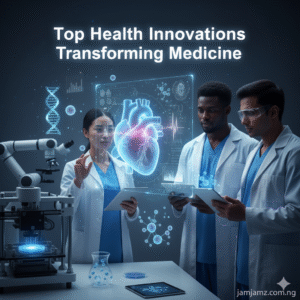
Biotechnology reshapes how vaccines and treatments are developed. Scientists now create vaccines that adapt to individual immune systems, increasing effectiveness and reducing side effects.
This technology speeds up vaccine production and opens possibilities for curing long-standing diseases. Customized vaccines could soon protect people from genetic or chronic illnesses, not just infections.
Biotechnology bridges science and nature, creating stronger defenses for future generations.
Portable and Rapid Diagnostic Devices
Medical diagnostics no longer depend solely on large laboratories. Portable devices can now analyze samples and provide results in minutes.
These tools prove essential in emergencies and remote regions where hospital access is limited. They help detect infections, measure vital signs, and monitor chronic diseases instantly.
Patients also use home testing kits to track blood pressure, glucose, or oxygen levels, reducing the need for hospital visits.
Fast and reliable diagnostics mean earlier action and better outcomes for everyone.
Digital Therapeutics and Smart Health Apps
Digital therapeutics combine technology and medicine in one interactive system. Mobile apps and devices now guide patients through treatment plans, exercise routines, and medication schedules.
These tools encourage healthy behavior, track daily progress, and provide instant feedback. Doctors can view this data in real time and adjust care accordingly.
Digital therapeutics make health management simple, engaging, and personal, empowering users to take full control of their wellbeing.
Augmented and Virtual Reality in Medical Training
Education in medicine has evolved through augmented and virtual reality. Students can now practice surgeries or explore human anatomy in realistic 3D environments.
This approach builds confidence, improves decision-making, and reduces the risk of error in real-life operations.
Experienced doctors also use AR and VR for advanced simulations, improving their skills without endangering patients. These technologies strengthen the foundation of medical training and enhance learning for the next generation of healthcare professionals.
Blockchain and Medical Data Protection
With the expansion of digital health, protecting patient information has become essential. Blockchain technology secures medical records by storing them in encrypted and tamper-proof systems.
This method ensures transparency and gives patients control over who accesses their information. It eliminates risks of unauthorized data use while allowing seamless sharing among trusted medical teams.
Blockchain creates a trustworthy framework for digital healthcare, balancing innovation with privacy.
Future Outlook: The Next Stage of Medicine
The future of healthcare blends human expertise with intelligent technology. As innovations grow, medicine becomes more predictive, precise, and preventive.
Soon, nanobots may travel through the bloodstream to repair cells in real time. Artificial intelligence could assist in surgeries and diagnostics faster than any current method. Genetic engineering may one day remove inherited diseases completely.
This future vision focuses on wellness, not just recovery. Medicine will no longer react to illness; it will anticipate and prevent it, creating healthier lives for all.
Conclusion
Health innovations are rewriting the story of medicine. Each breakthrough whether in robotics, genetics, data, or biotechnology brings society closer to a world where healthcare is accurate, affordable, and available to everyone.
These advancements empower both doctors and patients. They build a system that values prevention, personalization, and constant progress.
The transformation of medicine continues, driven by imagination, science, and the human desire to heal. The future of healthcare has already begun, and it promises a new era of life, health, and hope.